

Intersec Global 2027 Brings 1,000+ Security, Safety and Resilience Companies to Dubai
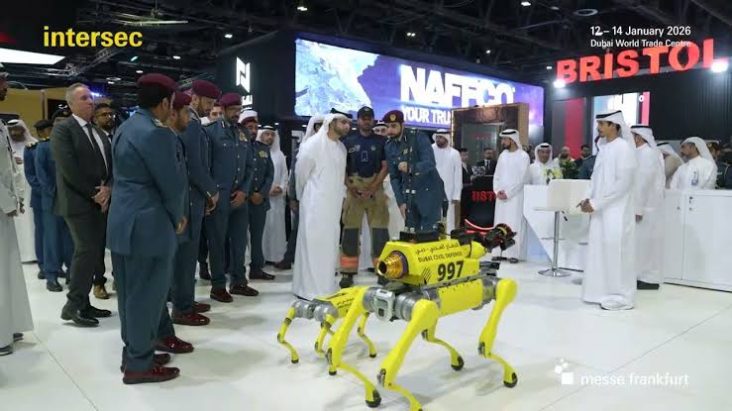
The international security, safety and emergency-response industry will begin 2027 with one of its largest global gatherings when Intersec Global returns to Dubai World Trade Centre from 12 to 14 January.
More than 1,000 exhibitors are expected across five major domains covering national security and law enforcement, cybersecurity and resilience, surveillance and physical security, fire and emergency response, and workplace safety and wellbeing.
The exhibition has expanded significantly from its original security-focused format.
Today, Intersec Global addresses a much broader question: how should governments, businesses and cities prepare for increasingly complex risks?
Those risks can be physical.
They can be digital.
They can involve fires, extreme weather, cyberattacks, terrorism, industrial accidents or failures of critical infrastructure.
The 2027 event brings the organisations responsible for responding to these risks together with the companies developing the technology designed to prevent and manage them.
A Global Security Marketplace
Intersec has been held for more than 27 editions and has grown into one of the region’s most established professional exhibitions.
The previous edition attracted 44,764 visitors from 151 countries and 1,180 exhibitors.
That international reach is one reason the show matters.
Security requirements vary from country to country.
A government agency has different priorities from a hotel.
An airport has different risks from a hospital.
An oil facility has different requirements from a shopping mall.
Intersec allows buyers to compare technologies across several sectors while suppliers meet customers from multiple markets within three days.
For security businesses operating in Dubai, it is also one of the most concentrated international networking opportunities of the year.
National Security Remains a Core Domain
Governments need technologies capable of protecting borders, infrastructure and public spaces.
This can include surveillance systems, command centres, communications technology, specialised vehicles and law-enforcement equipment.
Modern national security increasingly depends on integration.
A camera by itself provides limited value.
Data needs to reach the correct control centre.
Operators need software capable of interpreting information.
Agencies need reliable communications.
Multiple organisations may need to coordinate during an incident.
Intersec increasingly focuses on these connected systems rather than isolated products.
Cybersecurity Is Now Part of Physical Resilience
One of the most important changes in modern security is the merging of cyber and physical risk.
A power plant may have excellent fences and guards but still be vulnerable if attackers compromise industrial control systems remotely.
A hospital can lose access to medical systems after ransomware.
An airport cyberattack could affect operations without anyone physically entering the facility.
Critical infrastructure therefore needs both physical and digital protection.
Intersec Global’s Cybersecurity & Resilience domain covers areas including network security, identity, endpoint protection, data privacy, SOC operations, incident response, threat intelligence and operational-technology security.
Operational Technology Security Is Becoming Critical
Operational technology controls real-world systems.
Factories.
Power networks.
Water treatment.
Transport infrastructure.
Building systems.
Historically, many of these environments were relatively isolated.
They are increasingly connected to corporate networks and the internet.
Connectivity creates efficiency.
It also creates attack paths.
Cybersecurity teams therefore need to understand systems where availability and safety can matter more than ordinary data confidentiality.
Taking a factory system offline for security maintenance may not be simple.
A hospital cannot casually shut down essential equipment.
OT security requires specialised approaches.
AI Is Changing Surveillance
Modern surveillance systems are increasingly using artificial intelligence.
Traditional CCTV required people to watch screens.
Computer vision allows software to identify certain patterns automatically.
A system might detect unusual movement.
It can search for vehicles.
It may identify objects left in restricted locations.
Crowd density can be analysed.
This creates enormous potential but also raises privacy and accuracy concerns.
False alarms can waste security resources.
Biased systems can create unfair outcomes.
Organisations therefore need governance alongside technical capability.
Control Rooms Are Becoming More Intelligent
The control room is the centre of many security operations.
Camera feeds arrive.
Alarms are displayed.
Incident reports are generated.
Operators coordinate responses.
Intersec Global 2027 includes a Control Room Live experience designed to demonstrate how these environments operate.
The challenge is increasingly information overload.
More sensors create more alerts.
More cameras produce more video.
The solution cannot simply be hiring one operator for every screen.
Technology needs to prioritise the information that actually requires attention.
Code Zero: Gridlock Creates a Crisis Scenario
One of the 2027 show features is Code Zero: Gridlock.
The scenario-led experience is designed around a city under critical stress.
This is an interesting direction for a trade exhibition.
Instead of showing security products individually, a simulated crisis demonstrates how systems need to work together.
Communications.
Decision-making.
Command centres.
Emergency response.
Technology.
A crisis rarely respects industry categories.
Multiple organisations need to coordinate simultaneously.
Testing that coordination is just as important as purchasing equipment.
Fire Safety Is Becoming More Technological
Fire protection is another major part of Intersec.
Buildings increasingly use intelligent detection systems.
Sensors can provide more detailed information.
Modern suppression systems are designed for specialised environments.
Lithium-ion batteries introduce new fire risks.
Data centres create different challenges from ordinary offices.
High-rise buildings require complex evacuation strategies.
The fire industry therefore needs to keep adapting as the built environment changes.
Electric Vehicles Create New Emergency Challenges
EV growth introduces specific challenges for fire and rescue services.
Lithium-ion battery fires behave differently from conventional vehicle fires.
Thermal runaway can create intense heat.
Damaged battery packs may reignite.
Emergency responders require training and suitable procedures.
As electric vehicles become more common, these incidents move from specialist concern toward routine preparedness.
Data Centres Require Special Protection
AI and cloud computing are driving rapid data-centre construction.
These facilities are critical infrastructure.
A major data-centre incident can interrupt services used by thousands of organisations.
Fire suppression needs to protect valuable electronic equipment.
Physical access requires strict control.
Cybersecurity is fundamental.
Backup power systems add additional safety considerations.
This makes data centres a good example of why security sectors are converging.
Physical security, fire protection and cybersecurity all apply to the same facility.
Workplace Safety Is Expanding Beyond Compliance
Intersec Global also covers occupational safety and workforce wellbeing.
High-risk industries such as construction, manufacturing, logistics and energy need strong safety systems.
Personal protective equipment remains essential.
But companies increasingly use technology as well.
Wearable devices can monitor worker location.
Sensors can detect dangerous gases.
Digital permits can manage high-risk work.
AI may identify unsafe behaviour.
The goal is to prevent incidents before they happen rather than simply investigate them afterwards.
Emergency Response Needs Preparedness, Not Improvisation
The best time to decide how to respond to a disaster is before it happens.
Emergency planning requires exercises.
Organisations need clear responsibilities.
Communication systems must work.
Backup procedures need testing.
Intersec’s conferences and scenario experiences reinforce this principle.
Technology helps only if people know how to use it under pressure.
A sophisticated emergency platform that nobody has practised with may fail when it matters most.
Cyber Resilience Goes Beyond Prevention
No organisation can guarantee that it will never suffer a cyberattack.
Modern security therefore increasingly focuses on resilience.
Can the organisation continue essential operations during an incident?
Can systems be restored quickly?
Are backups protected?
Does leadership know how to communicate?
Has the incident-response plan actually been tested?
This shift is important.
Security teams are no longer judged only on whether attackers get inside.
They are also judged on how effectively the organisation responds.
Identity Has Become a Security Perimeter
Traditional networks once relied heavily on the idea of a secure internal environment.
Remote work, cloud platforms and mobile devices have weakened that model.
Identity now plays a central role.
Who is trying to access the system?
From which device?
From which location?
Should that person have access to this information?
Identity and access management have therefore become fundamental security technologies.
Critical Infrastructure Is a Government Priority
Power, water, transportation, telecommunications and healthcare systems all support modern life.
A disruption can create economic and social consequences far beyond the affected organisation.
Governments increasingly regulate security around these sectors.
Private companies operating critical infrastructure also need to coordinate with national authorities.
Intersec’s mix of public and private participants is particularly relevant for this reason.
Protection cannot be handled by one organisation alone.
Security Procurement Is Becoming More Integrated
Historically, organisations might purchase surveillance, access control, fire safety and cybersecurity through completely separate processes.
That can create disconnected systems.
Modern facilities increasingly need integrated approaches.
Access-control events might connect with video.
Cybersecurity tools may monitor building-management systems.
Emergency platforms can combine several types of information.
The challenge is interoperability.
Products from different vendors need to communicate.
Human Training Remains Essential
Security technology receives most of the attention at exhibitions.
People still determine whether systems succeed.
Operators need training.
Security guards need procedures.
Employees need cybersecurity awareness.
Emergency teams need drills.
Managers need to understand risk.
Social engineering continues working because attackers exploit human behaviour.
The strongest technology cannot protect an organisation whose people ignore basic security processes.
Intersec Global Is Becoming a Resilience Event
The change from Intersec to Intersec Global reflects a wider change in the industry.
Security is no longer one narrow category.
Cyberattacks can create physical consequences.
Climate risks affect emergency response.
Smart cities create new technology dependencies.
AI creates both defensive opportunities and new threats.
Organisations therefore need resilience across several systems simultaneously.
This is the direction Intersec Global 2027 is designed to address.
Three Days Focused on Protecting What Matters
From 12 to 14 January, Dubai World Trade Centre will bring together government agencies, security companies, technology providers, emergency professionals, cybersecurity specialists, fire authorities and safety experts.
Some visitors will be sourcing cameras.
Others will be evaluating SOC technology.
Fire services will examine emergency equipment.
Government delegations will discuss national resilience.
Industrial companies will search for safety solutions.
The technologies vary enormously.
The objective is the same.
Prevent incidents when possible.
Detect them quickly when they occur.
Respond effectively.
Recover fast.
In an increasingly connected and unpredictable world, that makes Intersec Global far more than a security-equipment exhibition.
It is becoming a marketplace for resilience itself.