


World of Coffee Dubai 2027 Brings 450+ Global Exhibitors to the Middle East’s Specialty Coffee Hub
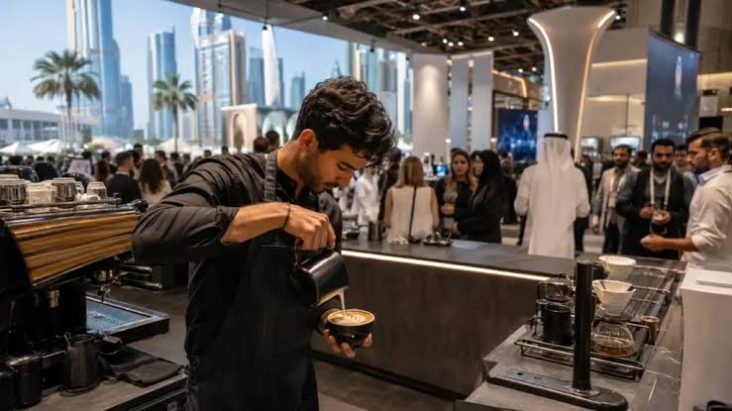
The Middle East’s rapidly growing specialty-coffee industry will gather at Dubai World Trade Centre from 26 to 28 January 2027 when World of Coffee Dubai returns for its sixth edition.
Organised by DXB LIVE in partnership with the Specialty Coffee Association, the event has grown dramatically since launching in the UAE.
World of Coffee Dubai began with around 3,000 visitors and has since developed into a major regional trade platform attracting tens of thousands of visits.
The 2027 edition is expected to feature more than 450 global exhibitors and attract a large international audience of roasters, café owners, distributors, baristas, equipment manufacturers, green-coffee traders and hospitality professionals.
For anyone working in specialty coffee, the event represents far more than an opportunity to taste interesting beans.
It is a marketplace covering the complete journey from farm to cup.
Coffee Has Become a Serious Regional Business
Coffee culture across the Gulf has changed significantly during the past decade.
Traditional Arabic coffee remains deeply important culturally.
At the same time, specialty coffee has expanded rapidly.
Independent cafés have opened across major cities.
Consumers increasingly discuss origin, processing method and roast profile.
Premium equipment has become common.
Local roasters source beans directly from international producers.
Baristas are treated as skilled professionals rather than simply service staff.
This creates a much more sophisticated market.
For cafés and hospitality companies operating in Dubai, World of Coffee provides direct access to many of the companies shaping that market.
More Than 450 Exhibitors Are Expected
The 2027 edition is expected to attract over 450 international exhibitors.
These companies cover a broad range of categories.
Coffee roasters.
Green-coffee producers.
Exporters.
Importers.
Espresso-machine manufacturers.
Grinder companies.
Water-treatment systems.
Alternative milk suppliers.
Syrups.
Packaging.
Café technology.
Education.
Accessories.
For professional buyers, having so many suppliers together makes comparison much easier.
A café group planning expansion may need coffee, grinders, machines and software.
Normally, each category could require separate sourcing.
World of Coffee brings them together.
The Event Runs Across Several Za’abeel Halls
World of Coffee Dubai 2027 takes place in Za’abeel Halls at Dubai World Trade Centre.
The three-day format allows trade visitors to combine sourcing with educational sessions, coffee competitions and practical demonstrations.
Unlike a general food exhibition, everything is focused on the specialty-coffee ecosystem.
That creates a more concentrated professional environment.
Attendees are likely to understand the technical language.
Suppliers can demonstrate advanced products.
Baristas can compare equipment at a detailed level.
Coffee buyers can discuss processing and origin directly with producers.
Coffee Begins Long Before the Café
Consumers often think about coffee only from the moment a barista begins preparing the drink.
The supply chain starts much earlier.
Coffee is grown across tropical regions.
Farmers harvest cherries.
Beans need processing.
They are dried.
Quality is evaluated.
Coffee is exported.
Importers move it between markets.
Roasters develop profiles.
Cafés finally brew the product.
Decisions at every stage influence flavour and price.
World of Coffee helps connect these parts of the supply chain directly.
Coffee Origin Matters
Specialty coffee places strong emphasis on origin.
Beans from Ethiopia may taste very different from coffee grown in Colombia.
Altitude influences development.
Variety matters.
Climate matters.
Soil matters.
Processing matters.
Even farms located relatively close to one another can produce distinct results.
Consumers have become increasingly interested in these differences.
That gives cafés an opportunity to sell coffee more like wine, where origin becomes part of the experience.
Processing Methods Create Different Flavours
After harvesting, coffee cherries must be processed.
Common approaches include washed, natural and honey processing.
Experimental techniques are also becoming increasingly common.
Fermentation can be controlled in new ways.
Producers experiment with temperature and environment.
These methods can create highly distinctive flavour profiles.
But experimentation also requires quality control.
A dramatic flavour is not automatically a good one.
Roasters need to understand how processing affects consistency.
Roasting Is Both Science and Craft
Green coffee has relatively little resemblance to the roasted beans consumers recognise.
Roasting transforms its chemistry.
Heat creates aroma and flavour.
The challenge is developing a profile suited to the bean.
Too little development can produce unpleasant characteristics.
Excessive roasting can destroy origin flavours.
Modern roasters use sophisticated software and temperature measurements to repeat successful profiles.
But human judgement remains important.
A computer can record what happened.
The roaster still decides what tastes best.
Espresso Machines Continue to Evolve
Professional espresso equipment is one of World of Coffee’s most visible categories.
Modern machines increasingly combine mechanical engineering with digital controls.
Temperature can be controlled precisely.
Pressure may be adjusted.
Shot times are monitored.
Some machines collect performance data.
Automation improves consistency.
This matters for large café chains where hundreds of drinks may be prepared every day.
But technology does not eliminate the need for barista skill.
Coffee preparation still depends on correct grinding, dosing and extraction.
The Grinder May Matter More Than People Think
Consumers often focus on espresso machines.
Professional baristas understand that grinders are equally important.
Coffee needs to be ground consistently.
Particle size influences extraction.
Small changes can dramatically affect taste.
Humidity and temperature may require grind adjustments during the day.
Commercial grinders therefore need both precision and durability.
For cafés, reliability is essential.
A machine failure during the morning rush can immediately affect revenue.
Water Is a Hidden Ingredient
Most brewed coffee is water.
That makes water chemistry extremely important.
Mineral content affects extraction.
Water that is too hard can damage equipment.
Water with unsuitable composition may produce flat or unpleasant coffee.
Professional cafés therefore use specialised filtration and treatment systems.
World of Coffee gives operators an opportunity to understand this often-overlooked part of beverage quality.
Barista Competitions Raise Professional Standards
World of Coffee Dubai also features championship activity.
Competitions encourage baristas to improve technical skills, presentation and sensory understanding.
Preparing coffee at competition level requires enormous precision.
Recipes are tested repeatedly.
Timing is controlled.
Presentation is practised.
Judges evaluate taste and technique.
These competitions may appear theatrical from outside, but they contribute to professional development.
Competitors often bring knowledge back into their cafés and training programmes.
The Cupping Room Focuses on Sensory Evaluation
Coffee professionals evaluate beans through a process known as cupping.
Samples are prepared using a standardised method.
Tasters assess aroma, flavour, acidity, body and other characteristics.
This allows buyers and roasters to compare coffees more objectively.
At World of Coffee, cupping sessions give participants access to products they may not encounter otherwise.
For green-coffee buyers, these sessions can lead directly to commercial relationships.
The Brew Bar Demonstrates Different Methods
Espresso is only one way to prepare specialty coffee.
Pour-over brewing.
Immersion methods.
Batch brewing.
Cold coffee.
Different preparation techniques highlight different characteristics.
The Brew Bar gives visitors opportunities to experience these methods and understand how equipment influences extraction.
For café owners, this can inspire new menu ideas.
Roaster Village Highlights Smaller Brands
The Roaster Village provides a platform for coffee-roasting companies to present products directly to attendees.
This can be particularly valuable for independent roasters.
Large companies can afford major exhibition stands.
Smaller businesses may gain greater visibility within a dedicated shared area.
Visitors can taste coffees from several roasters quickly.
That makes discovery easier.
Awards Encourage Product Innovation
World of Coffee includes the Best New Product Award and Coffee Design Award.
These programmes highlight innovation across equipment, products and visual branding.
Coffee has become a highly competitive consumer market.
Great taste alone may not be enough.
Packaging matters.
Equipment needs thoughtful design.
Café branding matters.
Sustainability matters.
Awards give companies another way to differentiate themselves.
Sustainability Begins at the Farm
Coffee production is vulnerable to environmental change.
Temperature and rainfall affect crops.
Farmers face economic pressure.
Certain producing regions may become less suitable as climates change.
The industry therefore needs to think seriously about sustainability.
That includes environmental practices.
It also includes economic sustainability.
Farmers cannot continue producing high-quality coffee if the price paid fails to support their livelihoods.
The specialty sector increasingly discusses long-term relationships and better transparency across the supply chain.
Direct Trade Can Build Stronger Relationships
Some roasters work more directly with coffee producers.
The objective is often to improve traceability and quality while creating more stable commercial relationships.
Direct trade is not a perfectly defined system, but the concept reflects growing interest in understanding where coffee comes from and who produced it.
Events like World of Coffee make these relationships easier by putting producers and buyers in the same place.
The MENA Coffee Market Continues Growing
The Middle East has strong historical coffee traditions, but modern specialty culture is adding another layer.
Premium cafés continue expanding.
Young consumers are highly engaged.
International chains compete with independent concepts.
Saudi Arabia has a particularly dynamic coffee sector.
The UAE serves as an important regional business and distribution hub.
For global coffee brands, the market is increasingly difficult to ignore.
Hospitality Companies Are Important Buyers
Hotels and restaurants also contribute significantly to specialty-coffee demand.
Guests expect better coffee than they did a decade ago.
Luxury hotels invest in premium equipment.
Restaurants develop dedicated coffee menus.
Corporate offices upgrade beverage offerings.
This expands the market beyond standalone cafés.
Equipment manufacturers and roasters increasingly sell to the wider hospitality sector.
Three Days Dedicated to Better Coffee
World of Coffee Dubai succeeds because it combines business, education and competition.
Buyers can source products.
Roasters can meet producers.
Baristas can compete.
Café owners can evaluate equipment.
Visitors can learn through lectures and demonstrations.
Suppliers can enter the Middle East market.
The 2027 edition arrives as regional coffee culture continues becoming more sophisticated.
Consumers want better quality.
Businesses want greater consistency.
Professionals want deeper knowledge.
From 26 to 28 January, Dubai World Trade Centre will become the centre of that conversation.
And behind every espresso machine, competition stage and tasting table lies the same objective: making the next cup of coffee better than the last.