


World Health Expo Dubai 2027 Expands Across Two Venues With 4,200+ Exhibitors
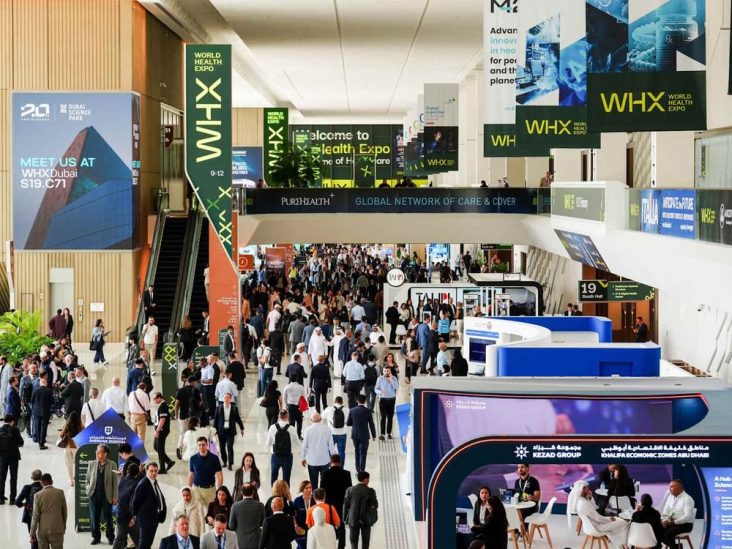
The global healthcare industry will gather on an unprecedented scale from 25 to 28 January 2027 when World Health Expo Dubai expands across both Dubai Exhibition Centre at Expo City and Dubai World Trade Centre.
Formerly known as Arab Health, the event has entered a new era under the World Health Expo brand while retaining its position as one of the world’s most important healthcare trade shows.
The 2027 edition is expected to attract more than 90,000 healthcare professionals, 4,200-plus exhibiting brands and participants representing more than 195 countries.
Organisers are projecting more than 235,000 professional visits across the two venues during the four-day event.
That scale makes WHX much more than a medical-equipment exhibition.
Hospitals attend.
Manufacturers attend.
Distributors search for new products.
Doctors and healthcare professionals participate in educational programmes.
Government delegations discuss healthcare strategy.
Investors search for opportunities.
Technology companies showcase artificial intelligence and digital-health systems.
The event brings almost every part of the healthcare ecosystem together.
Two Venues Create a Much Larger Event
One of the biggest changes for 2027 is the expansion across two major exhibition venues.
Dubai Exhibition Centre at Expo City will host a large part of the main WHX experience, while Dubai World Trade Centre will accommodate specialist sectors and related technology programmes.
For visitors, this means more products and more specialised areas.
For exhibitors, it creates additional room to demonstrate increasingly sophisticated healthcare technology.
Medical devices can require large stands.
Hospital infrastructure solutions need room.
Diagnostic equipment can involve complex demonstrations.
Laboratory systems may need specialist environments.
The two-venue strategy gives the exhibition considerably greater capacity.
For the broader Dubai events sector, it also demonstrates the growing importance of Expo City alongside the traditional DWTC exhibition district.
Medical Devices Remain at the Heart of the Exhibition
Medical technology remains one of WHX’s core sectors.
Hospitals continuously need new equipment.
Patient monitors.
Surgical systems.
Hospital beds.
Infusion devices.
Operating-room technology.
Rehabilitation equipment.
Diagnostic systems.
Medical consumables.
The challenge for healthcare buyers is that products must satisfy much stricter standards than ordinary business equipment.
Reliability can affect patient safety.
Clinical evidence matters.
Maintenance matters.
Regulatory approval matters.
Training matters.
That makes direct interaction with manufacturers particularly valuable.
Imaging Technology Continues to Advance
Medical imaging is another major area.
MRI, CT, ultrasound and other imaging systems allow clinicians to see inside the human body without invasive procedures.
Artificial intelligence is beginning to influence these technologies.
Algorithms can help analyse scans.
Systems may highlight areas requiring closer attention.
Workflow tools can help radiologists manage large volumes of images.
But AI does not eliminate the need for medical expertise.
Healthcare systems need tools that support clinicians rather than create additional uncertainty.
WHX gives hospitals an opportunity to compare these technologies directly.
Laboratory Medicine Is Now More Integrated
The 2027 event incorporates a stronger laboratory and diagnostics presence.
Laboratory medicine underpins huge parts of healthcare.
Blood tests help diagnose disease.
Pathology identifies abnormalities.
Genomics can reveal genetic information.
Microbiology helps identify infections.
Modern laboratories are also becoming increasingly automated.
Machines can process large numbers of samples rapidly.
Digital systems connect results with patient records.
AI may assist with interpretation.
Integrating laboratories more closely with the wider healthcare exhibition makes sense because diagnosis affects almost every stage of patient care.
Pharma and Biotech Expand in 2027
Pharmaceuticals and biotechnology receive greater emphasis in the new edition.
This reflects a broader shift within healthcare.
Traditional pharmaceutical companies remain important.
But biotech companies are developing increasingly specialised therapies.
Gene-based treatments are advancing.
Precision medicine is expanding.
Drug discovery is using AI.
Manufacturing requirements are becoming more sophisticated.
Bringing pharmaceutical and biotech companies into the larger WHX ecosystem connects them with hospitals, governments, investors and technology providers.
Wellness and Longevity Become Dedicated Themes
The 2027 event also introduces stronger focus on wellness and longevity.
Healthcare systems are increasingly looking beyond treatment after disease appears.
Prevention is becoming more important.
People want to remain healthier for longer.
Companies are developing technologies around early detection, health monitoring and personalised medicine.
Longevity has also become a significant investment sector.
Some companies focus on biological ageing.
Others develop diagnostics.
Wearables collect continuous health data.
The challenge is separating evidence-based healthcare from exaggerated claims.
Professional medical events can help bring greater scientific scrutiny to a rapidly growing field.
WHX Tech Focuses on Digital Transformation
World Health Expo 2027 takes place as part of a wider World Healthcare Week.
WHX Tech will run from 26 to 28 January at Dubai World Trade Centre.
The technology event is expected to bring more than 5,000 leaders, investors and innovators together with 200-plus brands and around 200 international speakers.
Its focus includes artificial intelligence, connected care, data and digital health.
This creates a dedicated environment for organisations interested specifically in healthcare technology.
AI Is Becoming Part of Clinical Workflows
Artificial intelligence has enormous potential in healthcare, but expectations need to remain realistic.
AI can analyse imaging.
It can assist with documentation.
Models can identify patterns in medical data.
Administrative processes can be automated.
Chat-based systems can provide basic patient support.
Drug research can become more efficient.
But healthcare is a high-stakes environment.
An inaccurate product recommendation is inconvenient.
An inaccurate medical recommendation may be dangerous.
Healthcare AI therefore needs rigorous evaluation.
Clinicians need to understand limitations.
Patient data needs protection.
Human oversight remains essential.
Digital Health Is Moving Beyond Telemedicine
Digital health was once associated mainly with video consultations.
The sector is now much broader.
Remote monitoring allows clinicians to track certain conditions from home.
Wearables record heart rate, activity and other signals.
Connected medical devices can transmit information.
Apps support medication adherence.
Digital therapeutics attempt to provide structured interventions through software.
Hospitals are integrating more data across care pathways.
The opportunity is significant, but integration remains difficult.
Healthcare organisations already operate many systems.
New technology needs to work with them.
Cybersecurity Is a Patient-Safety Issue
Healthcare has become one of the most targeted sectors for cybercrime.
Hospitals hold valuable data.
Systems need to operate continuously.
Ransomware can cause major disruption.
Medical devices may be connected to networks.
Digital health expands the attack surface further.
Cybersecurity therefore needs to be treated as more than an IT problem.
If systems go offline, clinical care can be affected.
Security becomes part of operational resilience and patient safety.
Healthcare Infrastructure Remains Essential
Technology receives enormous attention, but healthcare still requires physical infrastructure.
Hospitals.
Clinics.
Laboratories.
Operating theatres.
Medical gas systems.
Sterilisation facilities.
Emergency departments.
Healthcare buildings have very specific engineering requirements.
A hospital cannot simply be designed like an ordinary office.
Power reliability matters.
Infection control matters.
Patient flow matters.
Equipment requirements need to be planned early.
WHX includes healthcare infrastructure and assets as a dedicated sector.
Global Buyers Come to Source Products
For manufacturers, one of the event’s greatest attractions is access to buyers from around the world.
A medical-device company may be looking for regional distributors.
A hospital procurement team may be comparing suppliers.
Government agencies may be planning large healthcare projects.
Private hospital groups may be expanding.
The exhibition compresses many of these conversations into four days.
That makes WHX commercially significant as well as educational.
World Healthcare Week Adds a Leadership Dimension
WHX Leaders takes place on 26 January at Dubai World Trade Centre.
The invitation-only forum brings health ministers, health-system CEOs, institutional investors and technology leaders together.
These participants address questions that go beyond individual medical products.
How should healthcare systems fund future demand?
How should governments regulate AI?
How can ageing populations be supported?
Where should investment go?
How should healthcare infrastructure expand?
Policy decisions influence entire national systems, making leadership discussions essential.
Healthcare Is Facing an Ageing Population
Many countries are experiencing demographic change.
People are living longer.
That is positive.
But older populations generally require more healthcare services.
Chronic diseases become more common.
Health systems need more capacity.
Long-term care becomes more important.
Preventive medicine can help reduce some of this burden.
Technology can improve efficiency.
But governments still need sustainable financing models.
These challenges are likely to shape healthcare investment for decades.
Workforce Shortages Are Another Global Problem
Technology alone cannot operate a healthcare system.
Doctors.
Nurses.
Technicians.
Pharmacists.
Therapists.
Laboratory specialists.
Many countries face shortages across these professions.
AI may reduce administrative workload.
Automation may help laboratories.
Digital systems may improve productivity.
But human expertise remains central.
Healthcare organisations need to think about both technology and workforce development.
Four Days Covering the Entire Patient Journey
World Health Expo’s broader structure reflects the complete healthcare journey.
Early detection.
Diagnostics.
Laboratory testing.
Medical devices.
Treatment.
Pharmaceuticals.
Rehabilitation.
Digital health.
Hospital infrastructure.
Wellness.
Longevity.
Each part connects to the others.
A better diagnostic system can improve treatment decisions.
A better digital platform can improve follow-up care.
A more efficient hospital can reduce waiting times.
Innovation becomes most valuable when it improves the complete patient experience.
A New Chapter for a Historic Healthcare Event
Arab Health built a global reputation over decades.
The World Health Expo name represents an expansion rather than a simple rebranding.
The event is becoming larger.
Two venues are involved.
Technology receives greater emphasis.
Laboratory medicine is more integrated.
Pharma, biotech and longevity are expanding.
Leadership and investment programmes run alongside the main exhibition.
From 25 to 28 January 2027, the UAE will once again become one of the world’s most important meeting points for healthcare business.
Thousands of products will be displayed.
Major contracts will be discussed.
Clinical knowledge will be shared.
New partnerships will form.
But ultimately every part of the event connects to the same objective: finding better ways to keep people healthy and deliver care when they need it.